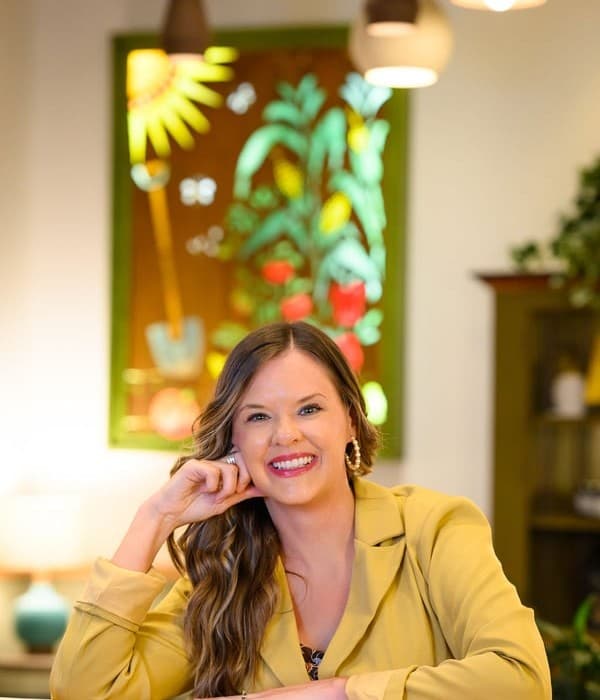
Caroline Skinner served as the COO of Asheville-based Tupelo Honey before joining The C Society as a fractional CEO/COO/CHRO.
From crisis to career pivot, the former Tupelo Honey COO shares lessons in leadership, resilience, and reinvention.
Since being featured on the cover of FSR magazine in September 2024, Caroline Skinner has not only weathered the devastating impacts of Hurricane Helene on her hometown of Asheville, North Carolina, but also transitioned out of her role as Tupelo Honey's chief operating officer into a fractional CEO/COO/CHRO at The C Society—a fractional C-suite hospitality collective founded by former Perkins American Food Co. brand president. Toni Ronayne.
At Tupelo, she built a track record of unit-level expansion, integrating people-first technology, building P&L accountability, driving customer loyalty, and creating high-performance cultures that deliver measurable results. As a fractional leader, Skinner now brings financial acumen, operational rigor, and customer-focused strategy to founders, executive teams, and investment-backed portfolios. She “thinks like an operator” and leads with people at the forefront of every decision.
I recently sat down with Skinner to catch up on life and learn more about her decision-making process and lessons over the past couple years. Some of those learnings include the power of owning your time, getting out of fight-or-flight mode after a crisis leaves you in survival mode, and making space to reconnect with your own voice.
Editor's note: This is part one in a new digital Q&A series where I reconnect with former FSR cover stars to find out what they've been up to, and what they've learned since they were featured in the magazine.
First off, Caroline, can you tell us a bit more about your new gig and how it's going?
Making the decision to leave a brand that you've invested in 13+ years building is such an emotional decision. However, I knew that my next chapter would involve working more on my own terms, building more flexibility into my life, and choosing to take on opportunities where my experience could have a direct and immediate impact. The C Society was a great opportunity to do exactly that.
So far, I've been working in a part-time capacity with a legacy 100-year-old brand that is scaling growth and building new operational and HR infrastructure. I've also had time to expand my skills in AI, working a bit with my husband on his start-up tech company, and having the flexibility to really be present with my kids.
How has your perspective on leadership evolved in this new model?
Leadership isn't always about managing teams, leading business functions, or having a title. Leadership can be as much about the ideas, recommendations, and problems that you are solving. A highly skilled individual contributor who clearly defines a problem and brings a focused solution can sometimes be more effective than multi-person teams with changing or competing priorities.
You've gone from leading a single restaurant brand to advising multiple hospitality businesses. How does your approach change when you're guiding several organizations versus being embedded in one?
I think the fractional model really requires that you remain disciplined to identify and solve specific problems. Often in the day-to-day operating of the restaurant business, we are reacting and jumping from problem to problem without a lot of depth or reflection on why those problems surfaced in the first place, and in the worst case, solving the same problems over and over again.
When working in a fractional capacity, you have to be extremely clear and focused on identifying what the business challenges are, and then once you are clear on the problem, providing a full roadmap to bring it to resolution. The fractional leader can bring their full focus to a defined set of business problems, while the existing team continues to run the day-to-day business.
Hurricane Helene had a profound impact on Asheville and your community. How did that experience shape your approach to leadership—both personally and professionally?
Natural disasters are unique because they impact an entire community. Every single person that lived here was personally impacted in some way, and we all had a story to tell about the experience. On the other side of it, I've been reminded of the importance of community-building, and the impact that community-based businesses, especially restaurants, have.
There were so many iconic places in Asheville that the hurricane destroyed. Some rebuilt, some haven't yet—and their voids shape us. So whether you're a large brand or a small local restaurant, it's important to allow your operators to be part of their community in a way that aligns with your values. Restaurants bring a unique hospitality and sense of “place” to a community, and they are vital to the fabric of a thriving community.
Personally, I think I am still learning all the ways this experience shaped me, but one thing I've learned is that crisis can often lead us to stay in a place of “survival,” and you have to be intentional about bringing yourself out of a fight-or-flight headspace. This often comes with rest, self-reflection, time, community, and connection—and getting back in touch with the version of yourself that isn't guarded by crisis.
Related
Listen to Caroline talk more about rebuilding after the devastating floods from Hurricane Helene, growth despite adversity, and what it means to be a woman in restaurant leadership on The Restaurant Innovator podcast.
In moments of crisis—whether it's a natural disaster or industry disruption—what have you learned about what teams need most from leadership?
Decisiveness and a clear and steady vision. Quick decisions in times of crisis are vital to staying ahead of the problem. But leaders also have to balance those quick decisions with an underlying steadiness that is rooted in an extremely clear vision for the business that exists beyond the times of crisis.
Your new role spans CEO, COO, and CHRO responsibilities. Which of those lenses are you finding most critical for operators right now, and how do they intersect in today's environment?
I think right now there are a lot of conversations that are at the intersection of all three roles, and are really rooted in organizational structure, resource allocation, and building the right teams to address the needs of the business while also being mindful of the challenging and changing environment that we are operating in.
The idea of a “fractional C-suite” is gaining traction. What problems does this model solve for restaurant and hospitality brands, and where are you seeing it make the biggest impact?
Historically, small or low-margin businesses like restaurants are extremely disadvantaged in their ability to hire top-tier talent. Talent gets developed internally via “trial by fire” or the business goes without needed talent, which often stifles growth. Fractional leadership provides accessibility to high-impact talent at any stage of the business—and it can quickly infuse the business with expertise at a fraction of the cost or commitment of a long-term hire. I think this is a healthy and a new advantage that gives more leaders access to outside perspectives and talent that would have otherwise been unavailable to them.
Looking back since your FSR cover, what's a lesson you've learned the hard way over the past year—and how has it changed the way you lead today?
So many lessons! I think the biggest one is not to be afraid to break up your routine, take a risk, and build something new—and the power of owning your time, and making space to connect with your own voice, intellect, and power. I am a sharper, more disciplined, and focused version of myself because of the experiences over the last two years—and absolutely ready to take on the next chapter.
Read the full feature on FSR Magazine.
This article was originally published in FSR Magazine on March 23, 2026. View the original article